How to Mne Verge
Verge (XVG) is a cryptocurrency you can efficiently mine with GPU (Graphic Processing Unit) and ASIC (Application-Specific Integrated Circuit). Before start mining you should read this article to optimize your results.…more
The list below summarizes everything you will find in our Verge mining guide:
- How to choose the proper Mining Hardware
- Suitable Software and Setup Guide
- Mining Pool Recommendations
Another option to earn Verge coins is through cloud mining, for which you don’t need a mining hardware. This option is covered in great details in our guide later on. Now, let’s start and see how to mine Verge profitably.
Why You Should Mine the Verge Coin
Verge’s mission is to empower people to use blockchain transactions daily. Nowadays, it’s perfectly possible to engage in direct transactions quickly, efficiently and privately. Using Verge, you will have flexible options for sending and receiving payments. The official wallet app offers helpful integrations and tools which enable users to handle large and small-scale payments.
When we speak of XVG, we are talking about a coin associated with low fees, quick transactions, high volume circulation, multiplatform support and the Wraith protocol. All these factors make it perfectly positioned for mass adoption.
From a security point of view, its safety is guaranteed because Verge is one of the few cryptocurrencies which have a multi-algorithm support. It implements 5 hashing functions: Scrypt, X17, Lyra2rev2, myr-groestl and blake2s. Depending on which algorithm you choose, you’ll need either an ASIC or GPUs to mine it profitably. Having a choice is pretty cool, isn’t it? In addition, this characteristic makes the coin attack proof. After all we said so far, sounds like we’re talking about a good investment option.
What is the Best Way to Mine Verge?
This is where we need to note that, being a prosperous miner is bound to the choice of XVG mining hardware. As mentioned above, Verge is built on five different hashing functions, which offer you the choice whether to mine it using ASICs or GPU rigs.
As difficulty is ever increasing, we recommend you join XVG mining pool to combine your hashing power with the one other miners possess. This is simply going to increase your chance of mining a block and gaining the reward from it. Once a block is found, the award is proportionally distributed between all the participants in the pool, according to their contribution. Anyway, pay attention to all the fees the pool asks you to agree with to avoid any surprises in future.
What do You Need to Start Mining Verge?
Number one rule when speaking of mining Verge (or any other coin) – choose the right hardware for the job, according to the algorithm in use. You will also need to procure a power supply no matter if we’re talking about GPU rigs or ASIC miners.
Stable internet connection and unlimited traffic is always an advantage. If you’re limited, then note that each device requires 500MB per day, which is about 15GB per machine for one month.
With this in mind, we advise you to calculate your power consumption. Check how many devices you can afford to run by simply reviewing the watts consumption and the power grid capacity of the place, where they are going to be located.
Just like fiat money, XVG coins need a wallet to be managed. Wisely choose the software, which suits you most, because it’s going to be your partner when broadcasting a transaction or exchanging some assets. Follow the link to achieve the perfect Wallet choice.
Here’s a Short Summary of the Things You Are Going to Need in Order to Mine Verge:
- Mining Hardware – GPU rigs or ASICs
- 24/7 Internet Connection with min. 1MB/s Bandwidth
- A Verge Wallet
- Enough Electrical Capacity to run your Hardware.
What Else to Consider?
- Heat: You should really think of a cooling system to avoid overheating issues with your hardware while mining for Verge coins.
- Noise: Furthermore, the mining machines produce a significant noise, which may be an issue depending on where you’ve situated the devices.
- Ultimately, both these issues could be solved. Check our article to have all the answers, you might be looking for: (Ventilation, noise and cooling decisions for your hardware)Going back to the Internet connection, it would be great it’s a low latency one. To put it shortly, if you mine a block, you need to state it as quickly as possible or someone else can beat you to the reward.
- We’ve come to a point where your Verge wallet choice can depend on your goals. There are a couple of options to choose from, so let us cover them in detail:
- Electrum Wallet – focused on speed and low resource usage. It uses a SPV (simple payment verification) technology which doesn’t require downloading the entire blockchain.
- QT wallet – require downloading the entire blockchain data, meaning some extra storage to handle it.
Eager to learn more? Visit our dedicated wallets page, to learn everything there is to them.
Which Verge Mining Hardware to buy?
The Verge network uses dynamic difficulty adjustment for each algorithm, so it can be mined efficiently with both GPUs and ASICs.
Here’s the best hardware choice you’re able to make for each algorithm implemented in Verge:
Recommend Verge Mining Hardware
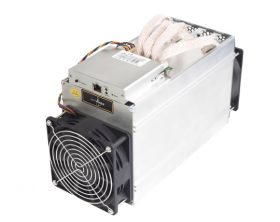
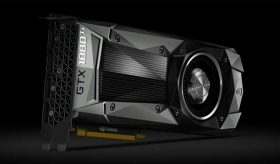
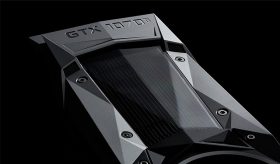
You can calculate the profitability of your hardware with the help of our Verge mining calculator and the information provided in the table. Just input the values of hash rate, power consumption and pool fee.
Having said that, a few more words on profitability. Depending on your choice of hardware, you’ll need to use different mining software:
- If you have a Nvidia based GPU mining rig, then we suggest using the Blake2s algorithm. You can use a multi-algo software like ccMiner for easier setup.
- AMD based rigs works best using either X17 or Lyra2rev2 algorithm. Sgminer is your safest bet, as it can easily switch between algorithms and test the performance.
Setup Hardware and Software / Configuration
You must be confused by the presence of multiple algorithms and multiple mining hardware (GPUs and ASICs). Fret not, as we are going to explain everything there is to mining for Verge.
GPU configuration
First you need to choose the right algorithm according to your GPU manufacturer (AMD or Nvidia).
For our example we are going to show you the configuration of ccminer:
-
01. Create a Wallet Address in Order to Collect Your Verge Coins
The easiest way to create XVG wallet is to download one from the official verge wallets website.
-
02. Download Mining Software
Download the latest version of ccminer from the official site. Extract the archive to a folder location where you will remember. We put ours on the desktop inside of a folder labeled ccminer.
-
03. Choose a Mining Pool From the Table Below
Hashfaster
.Server locations:
.Reward system: PPSAverage fee: 1.0%Our choiceZpool
.Server locations:
.Reward system: PPSAverage fee: 1.0%Antminepool
.Server locations:
. . .Reward system: PPSAverage fee: 1.0%For more information about about mining pools, rewards and fees please visit our dedicated mining pools website.
-
04. Create a Batch File
The next step is to create the .bat file with the pool and wallet addresses. This file will automatically start the miner with the configured parameters. Inside of your ccminer folder, right click and hit New > Text Document. Now inside of the new text document paste this:
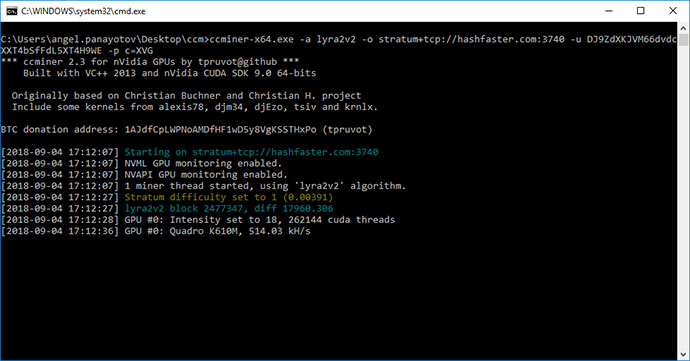
- Example configuration of Lyra2v2 algorithm on Hashfaster: ccminer-x64.exe -a lyra2v2 -o stratum+tcp://hashfaster.com:3740 -u YourWalletAddress -p c=XVG
- Example configuration of x17 algorithm on Zpool: ccminer-x64.exe -a x17 -o stratum+tcp://x17.mine.zpool.ca:3737 -u YourWalletAddress -p c=XVG
Substitute “YourWalletAddress” with your XVG wallet address.
There are some other parameters that you can configure but read the README file before doing that.
After you have your configuration the way you want it, hit Save As > start.bat (Select all files)

-
05. Start the Batch File
Now all that is left is to fire up the start.bat file and watch it working!
ASIC configuration
For our example we are going to show you the configuration of Antminer L3+. Other ASICs will have similar configuration method.
-
01. Create a Verge Wallet
First you need to create XVG wallet where you are going to store your mined coins. You can download one from the official verge wallets website.
-
02. Connect your Device
Connect the cables coming from the PSU (Power Supply Unit) to the sockets of your ASIC device.Also plug a LAN cable from your internet router to the LAN port of your miner.
-
03. Register a Mining Pool
Choose a mining pool from the table we presented you with, earlier in this article.
-
04. Find the IP Address of Your ASIC machine
You can access the configuration of your internet router and look for DHCP clients table where your miner’s IP address should be located. Another method is to use the IP Reporter tool from the manufacturer of your device. Read the manual for detailed information.
-
05. Configuration of the ASIC Miner
You can access the miner configuration by entering the IP address in a web browser. You will be prompted for username and password which by default are both “root”.
After successful login go to Miner Configuration page and enter the values for POOL URL, WORKER and PASSWORD.
Example:
pool url : scrypt.mine.zpool.ca:3433
worker: YourWalletAddress
password: c=XVG,d=128000
-
06. Save & Apply
Click Save & Apply and wait for miner to restart. You can monitor its activity from the status page.
Verge Cloud Mining
You can also cloud mine XVG, if you’re not interested in messing with hardware equipment, electricity bills and configuring devices. Do not however make your choice lightly. We recommend you perform a thorough research. After all, you need to find a provider which suits your mining expectations and then sign a contract, with them, assuming you agree with the conditions.
Some of the most popular cloud mining providers with top rankings and reputation scores for XVG are:
- MiningRigRentals.com – SCRYPT / LYRA2REV2 / X17
- NiceHash – SCRYPT
If you’re interested in the details on how cloud mining works, follow this link: cloud mining
Verge Calculator
If you’re wondering what your future profit will be in the process, we have an answer to that question. The estimated incomes are based on statistical calculation, depending on variable values such a difficulty, exchange rate and efficiency.
- If you mine XVG in a pool – the calculated earnings can vary greatly, depending on the pool’s efficiency and fees.
- If you mine Verge solo – the estimated expected earnings can vary greatly, depending on your luck, that is why this is not a recommended option.
To get the results, you need to enter the hash rate and power consumption of your mining equipment. Other required fields are electricity price and pool fee. Network difficulty and coin price are automatically added to the calculation for your convenience.
Disclaimer: The result from our calculator is approximate and it’s based on the current network difficulty and current coin price. Any fluctuations of this parameters can produce different result both in ascending and downward direction.
FAQ
How long does it take to mine 1 XVG?
It depends greatly on your hash rate. You can easily calculate this with the help of our Verge mining calculator.
Is it possible to mine Verge with GPU and ASIC?
This cryptocurrency supports several different algorithms which makes both GPU and ASIC mining possible.
Is it legal to mine Bitcoin?
Mining bitcoin is legal worldwide. Despite the effort of some National Banks to ban trading with bitcoin and other cryptocurrencies it remains legal to mine and hold that kind of virtual money.
Is it worth it?
You’re able to calculate it, using the Verge mining calculator.
What is the total coin supply of Verge cryptocurrency?
The maximum supply is 16.5 billion XVG.
When the maximum coin supply will be reached?
It is predicted to be somewhere between 2025 and 2027.
About Verge
This coin aims to achieve Bitcoin’s initial purpose of providing a fast, efficient and decentralized way of making direct transactions in full privacy. Verge possesses the option for Wraith Protocol, which makes it possible to choose between a public and a private register. Users are presented with the option to choose whether or not their transactions are visible on the blockchain.
Another interesting feature is the atomic swap (atomic cross-chain trading) which allows exchanges between Verge and other cryptocurrencies in circulation. It works in the same way to send funds from one user to another, without relying on centralized parties.
Tor, the onion router for Verge, is an IP service which enables anonymous communication across the network. It’s transfers traffic to more than 7000 relays. Tor is designed as a layered circuit-based network. Data passes through the layers and protect the user’s privacy as well as their freedom. Tor also keep Internet activities from being monitored. Taking all the work on, its servers are often centralized, so that is why the I2P (invisible internet project) is anonymizing data over the network. This provides a higher level of security.
Verge Team
The core team of Verge is composed of a development team, business development team, advisors, marketing specialists and technical support. Each of them is an experienced engineer, developer or specialist in his field. They’re perfectly matched in their journey to create the most common used cryptocurrency.
Verge Hashing Algorithm
Verge is a 100% PoW (Proof-of-Work) algorithm. The management believes that the PoS (Proof-of-Stake) systems unfairly benefit the users who have the most coins, which makes the rich get richer. As already noted, this crypto uses a multi-algorithm mining support, which means individuals with different types of equipment are able to mine Verge. This translates into two key benefits – fair distribution and higher security. The most significant advantage is that the coin supports 5 hashing algorithms.
Verge Forks
When launched, Verge was a fork of DogeCoin, which itself is a fork of Bitcoin. What we may note is that it succeeds lower block times for faster transactions. A fork means, that the source code of a crypto-currency has changed in order to create a new one, using the same base and offering other advantages. In May 2018, Verge suffered from a hard fork 51% attack, which made it lose 25% of its value. The team is currently working on resolving these issues.
Verge Regulations
As expected on the top of the list of countries which stand next to the cryptocurrency trading is the USA. Followed by Canada and Russia, these three are most likely to promote investments in the crypto market. On the other hand, China and Nigeria banned all crypto actions. Others such as the EU countries, South Africa, UK and Australia are building policies to strictly regulate crypto-trading.